Address
64/2357 Kaloor - Kadavanthara Road , Cochin - 682017 , Kerala.

Address
64/2357 Kaloor - Kadavanthara Road , Cochin - 682017 , Kerala.
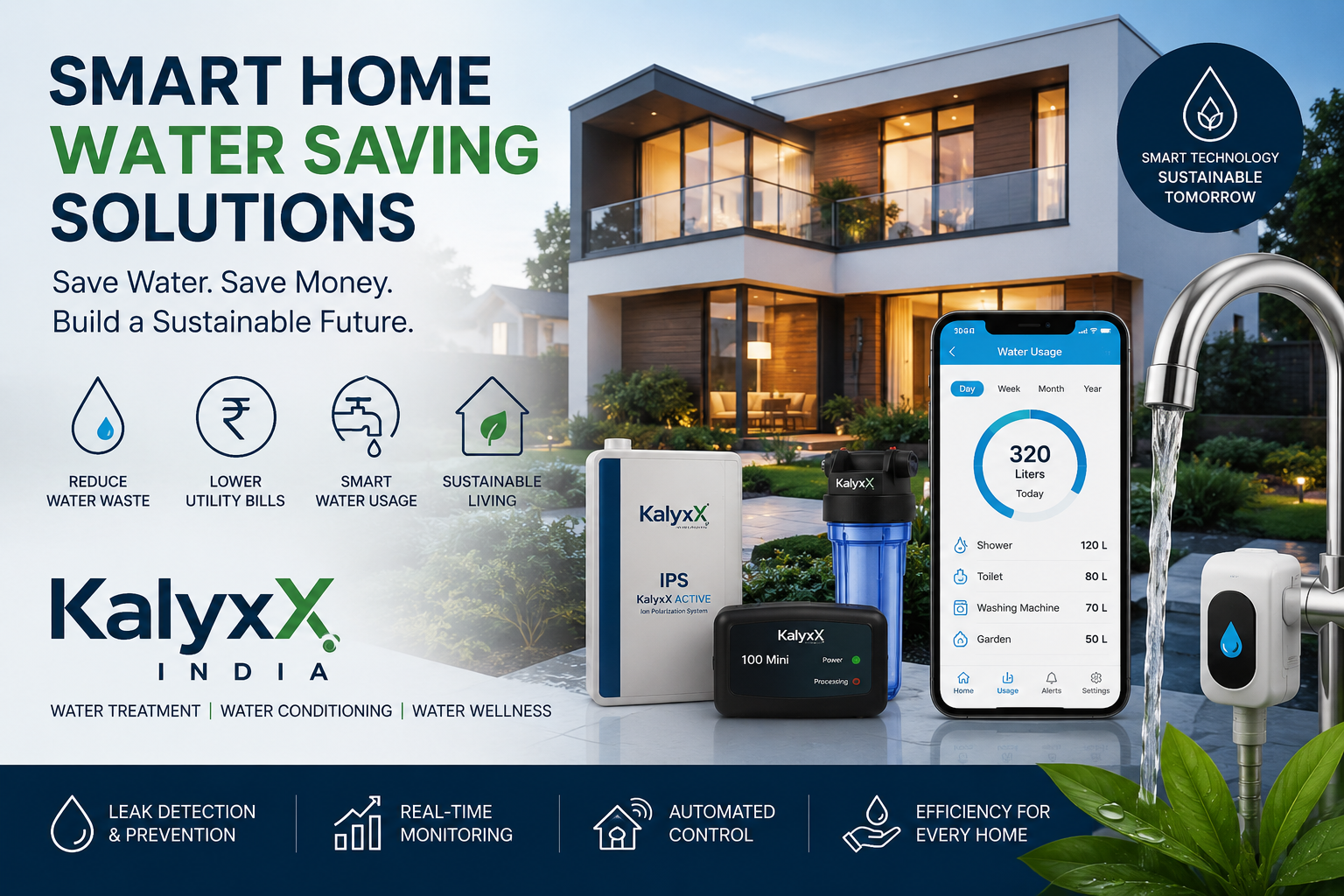
Water is one of the most valuable resources in every home, yet a considerable amount can be wasted through leaking pipes, overflowing tanks, inefficient fixtures, excessive irrigation, and everyday habits. As homes become more connected, technology is making it easier to monitor water consumption, identify waste, and automate everyday water-management tasks.
Smart home water saving solutions bring together technologies such as smart water monitoring systems, leak detectors, automatic water-level controllers, efficient fixtures, smart irrigation, and water-treatment solutions. These upgrades can help homeowners manage water more efficiently while potentially reducing unnecessary water and energy expenses.
For Indian homes, smart home water saving solutions can be particularly useful because many properties depend on overhead tanks, pumps, borewells, municipal supplies, or a combination of different water sources. A recent discussion among Indian homeowners also highlights tank overflow and manual pump operation as common practical concerns.
Traditional water conservation often depends on manual actions—checking tank levels, switching pumps off, watching for leaks, or adjusting irrigation schedules. These habits are useful, but technology can make water management more consistent.
The U.S. Environmental Protection Agency notes that leak detection and flow-monitoring devices can alert homeowners to irregular water use and help reduce water waste and damage caused by leaks.
With smart home water saving solutions, homeowners can gain better visibility into how water is being used and respond more quickly when something appears unusual.
Smart water saving systems are technologies that use sensors, monitoring devices, controllers, automation, and sometimes connected applications to manage water more efficiently.
Instead of depending completely on manual operation, these systems can monitor water flow, tank levels, leaks, irrigation requirements, or other conditions and respond according to predefined settings.
A typical smart water saving system may include:
The main purpose is simple: use the right amount of water, identify waste early, and automate repetitive tasks wherever practical.
When considering the best water saving devices for Indian homes, homeowners should focus on technologies that solve common household water problems.
Overhead water tanks are common in Indian homes. Forgetting to switch off a motor after the tank is full can result in unnecessary overflow and water wastage.
An automatic water level controller can monitor the tank and control pump operation according to the water level. This makes it one of the practical water saving devices for home use, particularly for properties where pumps are operated manually.
Smart water level sensors provide information about how much water is available in a tank. Depending on the system, the information may be displayed through an indicator or connected application.
This can help homeowners monitor consumption and plan water usage more effectively.
Leaks can remain unnoticed when they occur behind walls, under sinks, near appliances, or in less frequently used areas.
Smart leak detection devices use moisture sensors or flow monitoring to identify unusual water activity. The EPA explains that flow monitoring can detect consumption patterns that may indicate a leak or another irregularity.
Some advanced systems can also work with automatic shut-off valves to help limit water loss.
For homeowners exploring smart home water saving solutions, leak detection is one of the most practical upgrades.
A smart water monitoring system can track household water flow and consumption patterns. Instead of relying only on a monthly water bill, homeowners can gain more visibility into how water is being used.
Unusual consumption may indicate:
Early awareness can help homeowners investigate problems before they become larger and more expensive.
Smart technology does not always have to involve electronics.
Low-flow faucets and aerators can reduce water flow while maintaining useful pressure and performance. Water-efficient fixtures are recognised by the EPA WaterSense programme as an important part of residential water efficiency. According to the U.S. Environmental Protection Agency, WaterSense-labeled bathroom faucets and aerators can reduce sink water flow by 30% or more compared with standard-flow models.
These are relatively straightforward upgrades that can complement other smart home water saving solutions. Homeowners can also explore the EPA’s WaterSense guidance on bathroom faucets and aerators to understand water-efficient fixture options and potential savings.
Showers can contribute significantly to household water consumption. Smart home water saving solutions such as water-efficient showerheads, flow controls, and shower timers can help reduce unnecessary usage. The idea is not to sacrifice comfort. Instead, efficient shower systems help deliver the required water more effectively while supporting better water conservation at home.
Combining efficient showerheads with smart monitoring can give homeowners a more complete approach to water conservation.
Toilets are another important area for water conservation. Older toilets can use more water per flush than modern high-efficiency models.
Replacing an inefficient toilet can reduce water consumption over time, while leak monitoring can help identify continuously running toilets.
EPA’s WaterSense technical resources include toilets, faucets, showerheads, and other water-efficient residential features.
Water conservation should not stop inside the house. Gardens, lawns, and landscaped areas can also consume considerable amounts of water.
A smart irrigation system can adjust watering based on factors such as local weather or soil moisture rather than relying only on a fixed timer.
EPA WaterSense identifies weather-based and soil-moisture-based irrigation controllers as technologies that can improve outdoor watering efficiency.
For homes with gardens, this can be a useful addition to smart home water saving solutions.
Rainwater harvesting can complement smart home water saving solutions, particularly in regions where seasonal rainfall is significant. Collected rainwater can potentially be used for suitable non-potable purposes, depending on the system design and local requirements. Indian housing communities have increasingly explored rainwater harvesting to reduce dependence on tankers and groundwater.
Smart monitoring can further improve such systems by helping homeowners track tank levels and water availability.
Water efficiency is also connected to water quality. Hard water and mineral scaling can affect plumbing fixtures and household appliances over time. Smart home water saving solutions can include suitable water treatment and conditioning technologies that help address specific water-quality concerns. Homeowners should first understand their water characteristics and choose a system appropriate for their requirements.
For homeowners interested in modern water technology, explore the KalyxX water treatment product range through the relevant product page on the website.
The basic operation of a smart water system can be explained through four stages:
Sensors collect information about water level, moisture, flow, or other relevant conditions.
The controller or monitoring platform evaluates the information and identifies whether the situation is normal or unusual.
Depending on the system, it may switch a pump on or off, adjust irrigation, trigger an alert, or activate another programmed response.
Homeowners can review water-use information and make changes where necessary.
This combination of monitoring and automation is what makes smart water saving systems different from traditional manual water management.
There is no single savings figure that applies to every household. Water prices, family size, existing fixtures, plumbing condition, usage habits, and the technology installed all influence the final result. However, smart home water saving solutions can provide both water and financial benefits. The EPA notes that water-saving technologies and efficient household practices can help save water and money, while its WaterSense programme provides tools for estimating potential savings.
For this reason, homeowners should focus on reducing avoidable water consumption rather than expecting a guaranteed percentage reduction.
The best water saving devices for Indian homes depend on the property’s specific water requirements.
Before purchasing a device or system, consider:
For example, a house with frequent tank overflow may benefit most from an automatic water level controller, while a property with unexplained high consumption may benefit from flow monitoring and leak detection.
You do not necessarily need to upgrade everything at once.
A practical approach is to identify the biggest source of water waste first. Then choose a technology that addresses that specific problem.
A homeowner might begin with:
When these measures work together, they can create a more complete household water-management strategy.
As smart-home technology develops, smart home water saving solutions are becoming an increasingly important part of connected homes. Sensors, automation, monitoring platforms, efficient fixtures, and intelligent irrigation can work together to reduce unnecessary water consumption.
The real value of smart home water saving solutions is not simply having another connected device. It is having better information and greater control over how water is used.
For Indian homeowners, particularly those managing overhead tanks, pumps, gardens, and varying water supplies, practical automation can make everyday water management easier.

Rinu Ann George is an SEO Analyst at Upgraderz,Specializing in Search Engine Optimization,Content Strategy and Digital Visibility.
