Address
64/2357 Kaloor - Kadavanthara Road , Cochin - 682017 , Kerala.

Address
64/2357 Kaloor - Kadavanthara Road , Cochin - 682017 , Kerala.
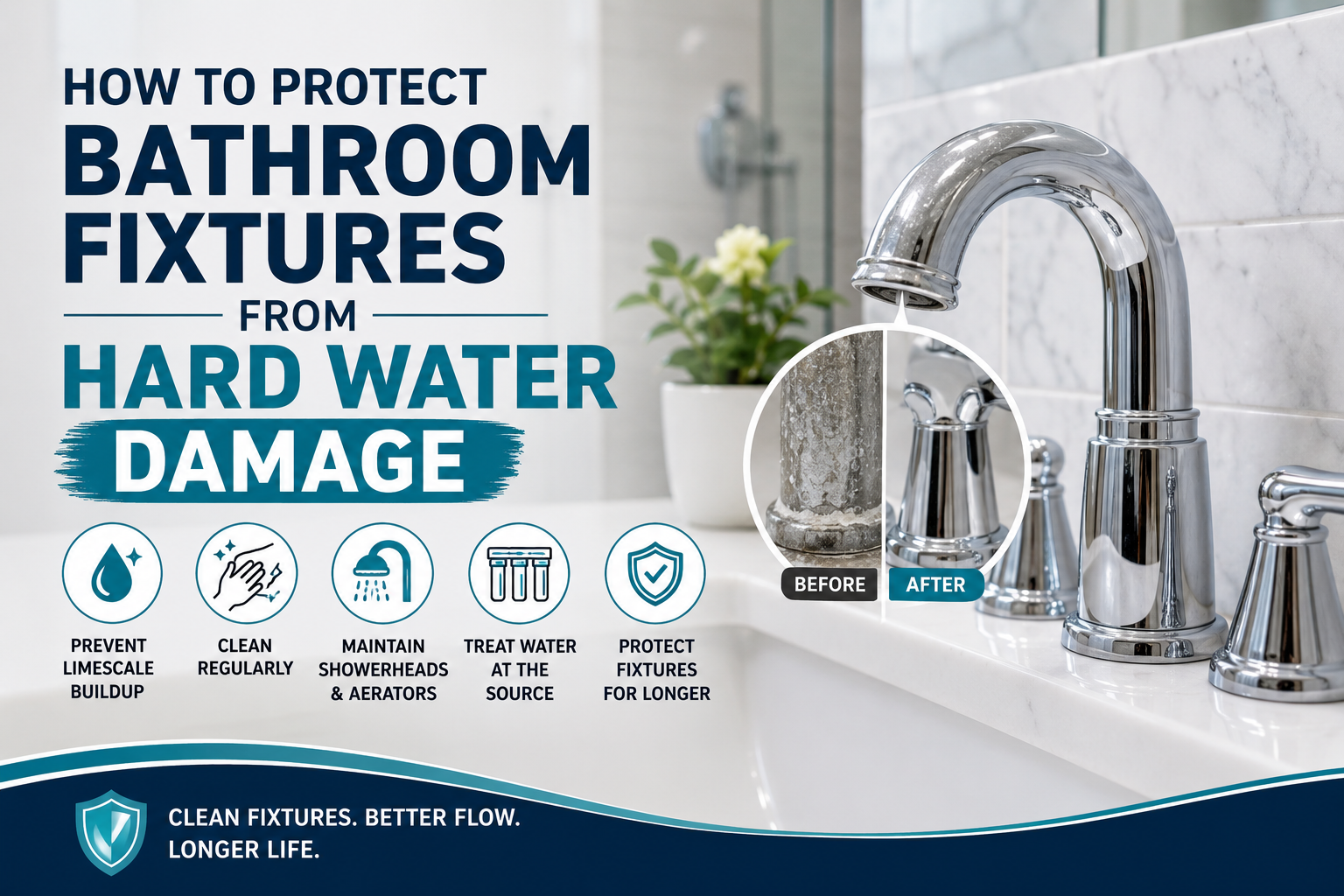
Hard water is a common household problem that can gradually affect the appearance and performance of bathroom fittings. It contains dissolved minerals, mainly calcium and magnesium, which can leave behind white stains, chalky residue, and limescale buildup when water evaporates. Over time, Bathroom Fixtures from Hard Water can develop mineral deposits that affect faucets, showerheads, aerators, taps, and other fittings.
The good news is that Bathroom Fixtures from Hard Water can be protected with a combination of regular cleaning, proper maintenance, suitable fixtures, and effective water treatment.
When hard water dries on a bathroom surface, calcium and magnesium can remain behind as mineral deposits. These deposits are especially noticeable around faucet spouts, shower nozzles, aerators, handles, and areas where water regularly collects.
Bathroom Fixtures from Hard Water can develop cloudy marks and limescale when these deposits are allowed to accumulate repeatedly. In showerheads and aerators, scale can also block small openings and gradually reduce water flow.
Hard water can also make bathroom cleaning more difficult because mineral deposits combine with soap residue, creating stubborn stains that require more frequent maintenance.
Watch for these common signs of hard water damage:
These symptoms do not always mean that a fixture needs replacement. In many situations, regular maintenance combined with addressing water quality can significantly reduce problems affecting Bathroom Fixtures from Hard Water.
One of the easiest ways to prevent hard water stains is to remove water before it evaporates. Keep a soft microfiber cloth near the sink or shower and wipe faucets, handles, and exposed fittings after use.
For Bathroom Fixtures from Hard Water, this simple habit can make a noticeable difference because it reduces repeated evaporation and mineral deposition. Regular drying also helps preserve the appearance of chrome and other decorative finishes.
Do not wait until limescale becomes thick and difficult to remove. Regular descaling is generally easier and reduces the need for aggressive cleaning.
A suitable mild descaling solution can help dissolve mineral deposits on compatible surfaces. White vinegar is sometimes used for certain fittings, but always check the manufacturer’s care instructions first. Some specialty finishes and coatings may not tolerate acidic cleaners.
Avoid abrasive pads, metal scrapers, and harsh chemicals that can scratch or damage plated surfaces. When cleaning Bathroom Fixtures from Hard Water, test any unfamiliar cleaning product on a small, hidden area before applying it widely.
Showerheads and faucet aerators contain small openings where mineral deposits can accumulate. A gradual reduction in spray performance may therefore be caused by limescale rather than a major plumbing problem.
Clean removable aerators according to the manufacturer’s instructions. For showerheads, use a compatible descaling method and avoid scratching the nozzles.
Regular cleaning helps maintain water flow and reduces the possibility of heavy scale buildup. This is particularly important for Bathroom Fixtures from Hard Water because these components are continuously exposed to mineral-rich water.
If you are renovating your bathroom or replacing old fittings, consider fixtures that are easy to clean and maintain. Look for durable finishes, serviceable aerators, replaceable cartridges, and reliable manufacturer support.
The objective is not to find a fixture that eliminates hard water. Instead, choose bathroom faucets and fittings that can tolerate regular maintenance and make mineral deposits easier to remove.
Brushed finishes may make water spots less noticeable than highly polished surfaces, although the best option ultimately depends on the fixture material and manufacturer’s maintenance recommendations.
Cleaning can remove existing deposits, but it does not change the hardness of incoming water. If your bathroom repeatedly develops white stains despite frequent cleaning, consider testing the water hardness.
A suitable whole-house or point-of-entry water treatment system can help manage hard water before it reaches multiple bathroom fittings. The right solution depends on water hardness, water source, household consumption, and the treatment technology being used.
If you are looking for a more proactive approach, explore the advanced water treatment solutions from KalyxX. Addressing the underlying water-quality issue can reduce recurring scale and make bathroom maintenance considerably easier.
Do not ignore small changes in your bathroom fittings. A weaker shower spray, stiff handle, dripping faucet, or visible scale can be an early indication that maintenance is needed.
Clean aerators, inspect seals, check connections, and replace worn components when necessary. With routine maintenance, Bathroom Fixtures from Hard Water can remain functional and attractive for longer.
Creating a simple monthly inspection routine can prevent minor mineral buildup from becoming a more expensive plumbing or fixture problem.
Avoid using strong acids, toilet-bowl cleaners, metal scrapers, or abrasive pads on bathroom fittings unless the manufacturer specifically confirms that they are safe.
Although aggressive products may remove hard water stains quickly, they can damage plating, protective coatings, seals, and surrounding surfaces.
You should also avoid assuming that a drinking-water purifier automatically solves a whole-house hard-water problem. Point-of-use purification and whole-house water treatment have different purposes. If scale is appearing across several fixtures, the overall water supply should be evaluated.
Protecting Bathroom Fixtures from Hard Water offers several practical advantages:
Hard water is ultimately a water-quality issue, not simply a cleaning issue. Treating the underlying cause can therefore be more effective than repeatedly removing mineral deposits from surfaces.
Protecting Bathroom Fixtures from Hard Water requires more than occasional cleaning. Wiping fittings dry, removing limescale early, maintaining showerheads and aerators, selecting easy-to-maintain fixtures, and checking water hardness can all help reduce hard water damage.
If your bathroom constantly develops white stains, mineral deposits, and limescale, look beyond surface cleaning and investigate the quality of the water entering your home. The right treatment approach can help reduce recurring buildup and make everyday bathroom maintenance easier.
For readers interested in broader water-treatment solutions and technologies, Swiss Aqua’s water-treatment resources provide additional information to explore.
With consistent maintenance and appropriate water treatment, Bathroom Fixtures from Hard Water can stay cleaner, perform better, and maintain their appearance for considerably longer.

Rinu Ann George is an SEO Analyst at Upgraderz,Specializing in Search Engine Optimization,Content Strategy and Digital Visibility.
