Address
64/2357 Kaloor - Kadavanthara Road , Cochin - 682017 , Kerala.

Address
64/2357 Kaloor - Kadavanthara Road , Cochin - 682017 , Kerala.
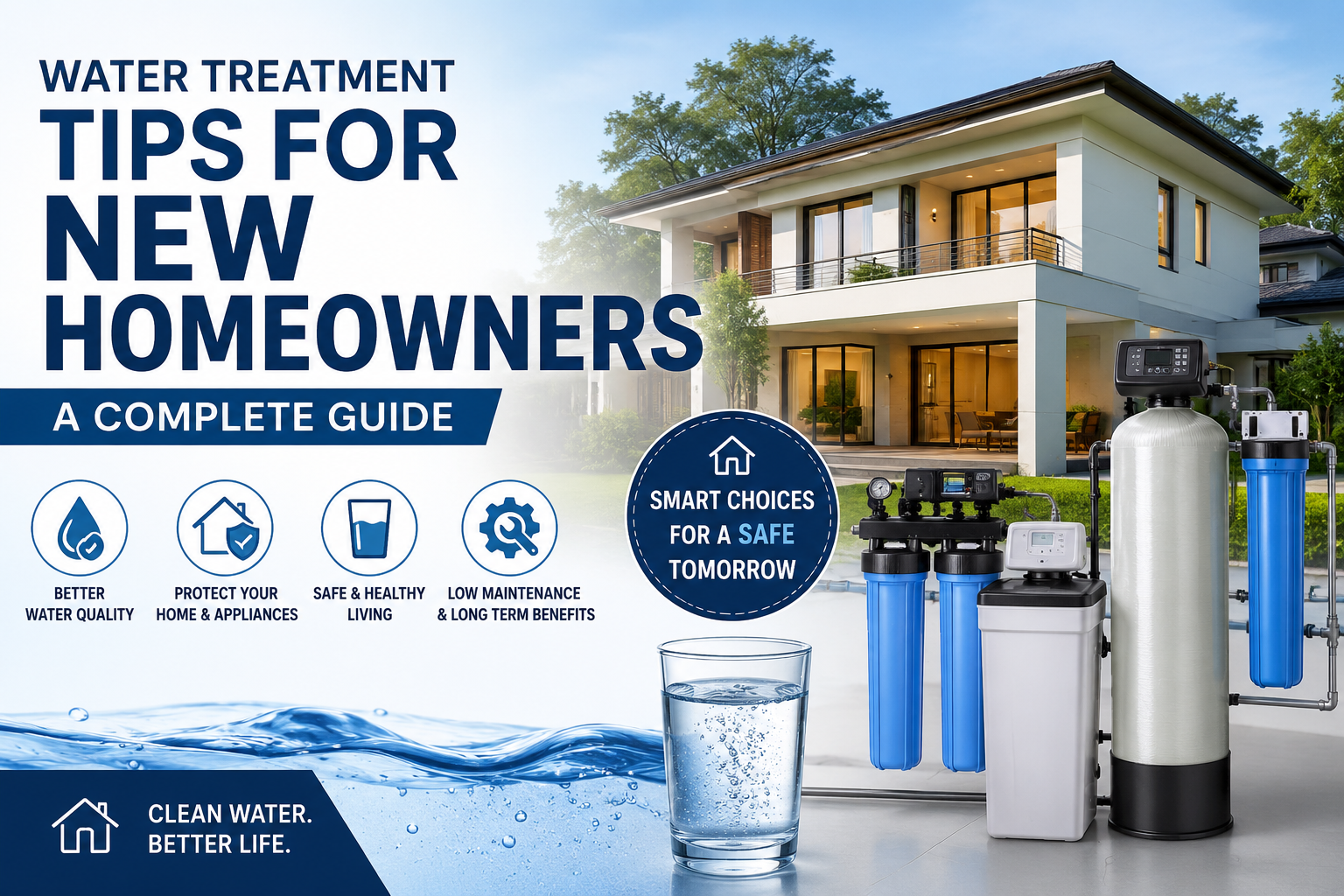
Buying a new home is an exciting milestone. While homeowners often focus on interiors, furniture, electrical systems, and appliances, one essential factor can easily be overlooked: water quality. The water entering your home affects your family’s daily life, plumbing fixtures, kitchen appliances, bathrooms, laundry, and overall comfort.
Understanding the basics of Water Treatment Tips for New Homeowners can help you make smarter decisions and protect your home from common water-related problems. From hard water and sediment to unpleasant odours and impurities, identifying your water quality concerns is the first step toward choosing the right solution.
One of the most important Water Treatment Tips for New Homeowners is knowing where your household water comes from.
Your home may receive water from:
Different sources can have different water quality characteristics. Municipal water may contain disinfectants such as chlorine, while groundwater can contain minerals, sediment, iron, or hardness-causing compounds. Understanding these differences is one of the essential Water Treatment Tips for New Homeowners when choosing the right treatment solution.
If you use a private water source, regular testing is especially important. According to the Centers for Disease Control and Prevention (CDC) guidance on well-water testing, private well owners should periodically test their water for important indicators such as bacteria, nitrates, total dissolved solids, and pH.
Installing a water treatment system without understanding your water quality can lead to unnecessary expenses. One of the most essential Water Treatment Tips for New Homeowners is to test the water before choosing a treatment solution. Water testing helps identify the specific issues affecting your home’s water.
A basic water quality assessment may help identify:
These Water Treatment Tips for New Homeowners are important because no single treatment technology is designed to solve every possible water problem.
The NSF guide to home water treatment also emphasizes understanding what is present in your water before selecting a treatment solution. Once you know the problem, you can choose a system designed for your specific requirements.
Hard water is one of the most common concerns for homeowners. It generally contains higher concentrations of minerals such as calcium and magnesium.
Common signs of hard water include:
Over time, mineral scaling can affect plumbing systems and appliances that use water regularly. Water treatment solutions designed to manage hardness can help reduce these issues and improve the overall water experience inside your home.
This makes identifying water hardness one of the most practical Water Treatment Tips for New Homeowners.
New homeowners should think about whether they need treatment only for drinking water or for the entire house. One of the most important Water Treatment Tips for New Homeowners is understanding which type of treatment system best suits their household needs.
A point-of-use system treats water at a specific location, such as the kitchen sink. A whole-house or point-of-entry system treats water as it enters the home, helping address water quality concerns throughout bathrooms, kitchens, washing machines, and other areas.
Whole-house water treatment can be particularly useful when the problem affects multiple parts of the property, such as sediment, hardness, or unwanted taste and odour.
The right choice depends on your water quality, household size, water usage, and the specific issues identified during testing.
There are several types of home water treatment technologies, and each serves a different purpose.
Common options include:
Sediment filters can help reduce visible particles such as sand, dirt, and rust. They are often useful where water contains suspended particles.
Carbon filtration may help improve taste and reduce certain aesthetic issues such as chlorine taste or odour.
Reverse osmosis systems are commonly used for drinking water treatment and can address specific dissolved contaminants depending on the system’s design and certification.
UV technology is used in certain applications for microbiological treatment.
These solutions are designed to address issues related to minerals and scaling.
The key is to match the technology to your actual water quality needs rather than choosing a system simply because it is popular.
Good water management is not only about installing a treatment system. Regular maintenance is equally important.
New homeowners should inspect:
Scale and sediment buildup can gradually reduce efficiency and affect the lifespan of appliances. Cleaning fixtures regularly and addressing water quality concerns early can help prevent expensive maintenance issues.
Among the most useful Water Treatment Tips for New Homeowners is taking a preventive approach instead of waiting until visible damage appears.
Every water treatment system requires proper maintenance. Filters may need replacement, treatment media may require servicing, and certain systems need periodic inspections.
Ignoring maintenance can reduce a system’s effectiveness over time.
When selecting a water treatment solution, always consider:
Choosing a certified or appropriately tested system for the contaminants you want to address is also important. Among the essential Water Treatment Tips for New Homeowners is selecting a system based on its specific performance claims and treatment capabilities. NSF explains that certifications relate to specific performance claims, meaning homeowners should check what a particular system is actually designed to reduce.
For homeowners looking for innovative approaches to water treatment and water quality management, KalyxX India offers solutions designed around modern water treatment technology.
KalyxX focuses on innovative approaches that can help address water-related challenges while supporting better protection for plumbing systems, household fixtures, and appliances.
You can explore the available KalyxX India water treatment solutions through our Products page.
Understanding the available technology and selecting a solution based on your home’s water conditions can make a significant difference in long-term maintenance and water usage.
The final point in these Water Treatment Tips for New Homeowners is to think beyond the initial installation cost.
A good water treatment strategy can potentially help homeowners:
Homeowners can also explore Smart Home Water Saving Solutions to understand how modern technologies and smarter water management practices can help reduce unnecessary water usage and create a more efficient home.
Instead of treating water problems only after they become serious, new homeowners should assess their water quality early and develop a suitable treatment plan.
Water plays a role in almost every part of your home, from cooking and bathing to cleaning and protecting appliances. Following the right Water Treatment Tips for New Homeowners can help you identify potential issues before they cause unnecessary inconvenience or damage.
Start by understanding your water source, test your water quality, identify concerns such as hardness or sediment, and choose technology that addresses your specific needs. Following the right Water Treatment Tips for New Homeowners can help you make informed decisions about drinking water filtration, whole-house treatment, or solutions for mineral-related problems.
With proper planning, regular maintenance, and the right water treatment solution, homeowners can enjoy better water quality while helping protect their home’s plumbing, fixtures, and appliances for years to come.
Yes. Water testing is one of the most important steps for new homeowners, especially when using borewell, well, or groundwater. A water test can identify issues such as hard water, iron, sediment, bacteria, pH imbalance, and other water quality concerns before you invest in a treatment system.
Common signs of hard water include white or chalky deposits on taps and showerheads, soap that does not lather easily, water spots on glassware, stiff laundry, and scale buildup on appliances and plumbing fixtures.
A whole-house water treatment system can be worth considering when water quality issues affect multiple areas of your home. It treats water as it enters the property, helping provide treated water for bathrooms, kitchens, washing machines, and other water outlets.
Before choosing a water treatment system, homeowners should check their water source, test their water quality, identify specific problems such as hardness or sediment, understand their household water usage, and consider the system's maintenance requirements and long-term costs.

Rinu Ann George is an SEO Analyst at Upgraderz,Specializing in Search Engine Optimization,Content Strategy and Digital Visibility.
